
The Psychology of Restaurant Portions: Why We Overeat Without Realizing It
Walk into any American restaurant in late 2025, and you’ll encounter a fascinating psychological experiment: portion sizes that systematically override our natural satiety signals. This isn’t accidental—it’s carefully engineered restaurant economics meeting deeply rooted human psychology. Understanding these mechanisms is the first step toward reclaiming control over how much we eat when dining out.
The “Value” Illusion: Restaurants compete on perceived value, not nutritional appropriateness. Larger portions make customers feel they’re getting more for their money. The psychology is simple: if Restaurant A charges $12 for 8 oz of pasta and Restaurant B charges $13 for 12 oz, we perceive B as better value—even if we only need 4 oz. This “more is better” mentality bypasses our actual hunger signals.
Plate Size Deception: Larger plates make portions appear smaller. Research shows people serve themselves 20-30% more food on 12-inch plates versus 10-inch plates, yet perceive the amount as similar. Restaurants use oversized dishes to make massive portions seem normal, triggering what psychologists call the “Delboeuf illusion”—where identical portions appear smaller on larger backgrounds.
The “Clean Plate Club” Legacy: Many Americans carry childhood programming to finish what’s served. Restaurants exploit this by serving more than we need, knowing we’ll likely eat 92% of what’s on our plate regardless of portion size. This automatic behavior overrides the body’s “I’m full” signals that typically arrive after consuming appropriate amounts.
Visual Cues vs. Internal Signals: Humans are visual eaters. We decide how much to eat based on what we see, not what we feel. When presented with a large portion, we unconsciously adjust our consumption expectations upward. This explains why people given large popcorn buckets eat 45% more than those given medium buckets—even when the popcorn is stale.
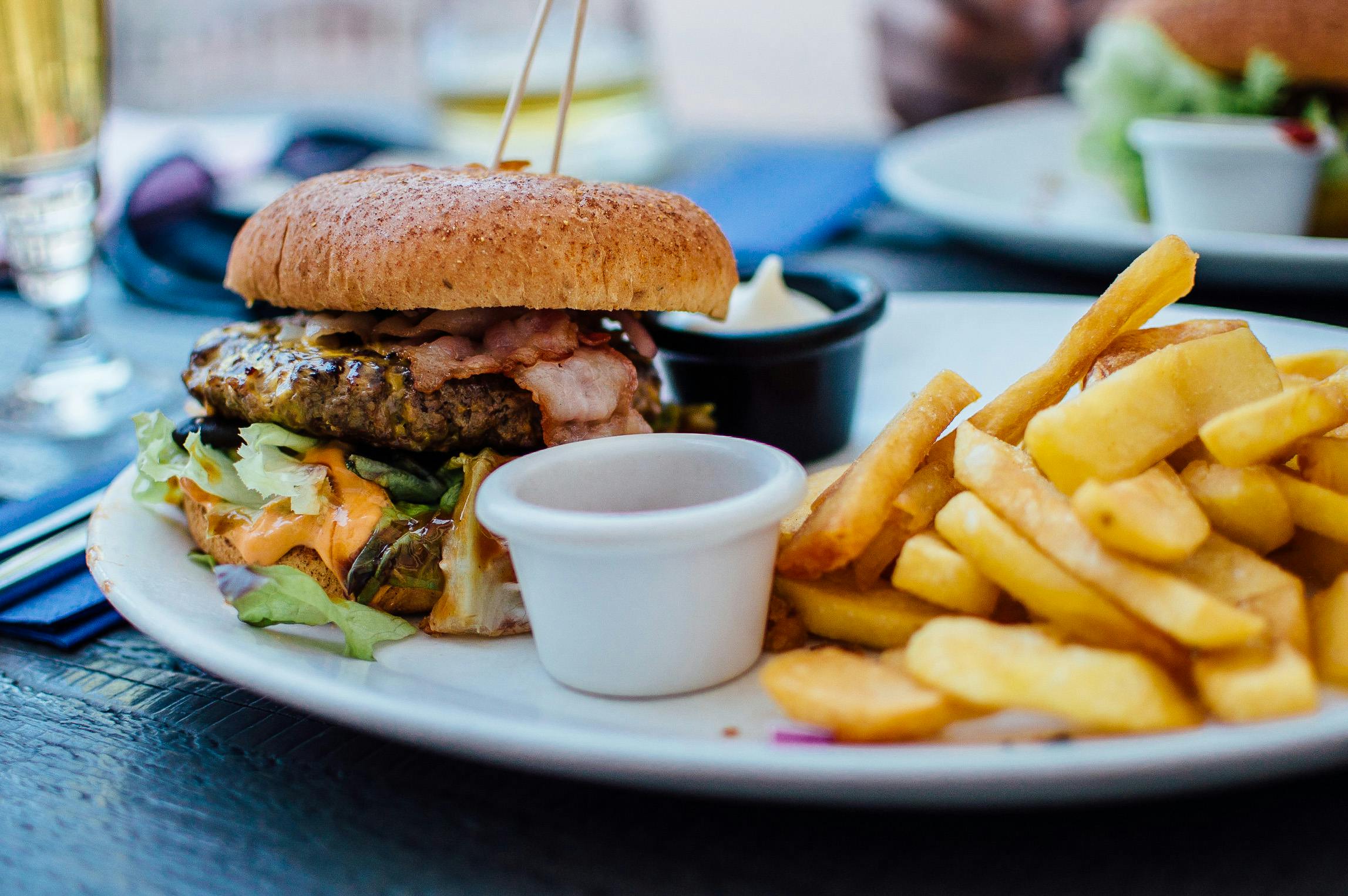
The Unit Bias Phenomenon: We perceive single units (one sandwich, one bowl, one plate) as appropriate portions regardless of actual size. Restaurants serve “one” burger that might contain enough meat for three servings. Our brain registers “one unit = appropriate” rather than analyzing actual quantity.
Social Proof and Normalization: When everyone around us receives massive portions, our perception of “normal” adjusts accordingly. This creates a collective normalization of overeating that makes appropriate portions seem inadequate. Psychologists call this “pluralistic ignorance”—where individuals mistakenly believe everyone else finds excessive portions normal.
The Sensory-Specific Satiety Exploit: Restaurants design meals with multiple components (protein, starch, vegetable, sauce, garnish) to bypass sensory-specific satiety—the phenomenon where we get bored with one flavor but remain hungry for others. By offering variety on one plate, they encourage consumption beyond true hunger.
Our Calorie Comparison Tool as Psychological Reset: By comparing portion sizes across restaurants, you retrain your perception of “normal.” Seeing that Restaurant A’s burger contains 300 fewer calories than Restaurant B’s seemingly identical burger recalibrates your expectations. This cognitive reset helps override the psychological traps restaurants set.
Practical Psychological Defenses:
The Half-Plate Rule: Immediately box half your meal before eating. This creates visual completion (clean plate) with appropriate consumption.
Share Strategically: Splitting meals satisfies psychological needs for variety and completion while halving portions.
Order from Appetizer Menu: Appetizer portions often match appropriate meal sizes while satisfying the “one unit” psychological need.
Use Smaller Plates at Home: Retrain your perception of appropriate portions in your home environment.
Mindful Eating Practice: Pause halfway through your meal. Check in with hunger signals rather than visual cues.
The Economic Psychology: Restaurants maximize profit through ingredient economics. The cost difference between 8 oz and 12 oz of pasta is minimal, but they can charge significantly more for the larger portion. The psychology of perceived value makes customers willing to pay that premium, creating a win for restaurants, loss for our health.
The 2025 Reality Check: As portion sizes have grown 2-4 times since the 1970s, our psychological calibration has shifted. What our grandparents considered a feast, we consider a regular meal. This gradual “portion creep” has happened so slowly that most people don’t recognize the distortion.
Reclaiming Control: Awareness is the antidote to psychological manipulation. Before your next restaurant visit, use our comparison tool not just for calories but for portion awareness. Notice which restaurants serve reasonable portions versus excessive ones. Support establishments offering appropriate sizes or half-portion options.
Remember: Restaurants are selling an experience, not a nutrition plan. Their success depends on you enjoying the meal enough to return. Oversized portions contribute to that enjoyment through psychological mechanisms. Your job isn’t to avoid restaurants but to enter them with awareness of these tactics.
By understanding the psychology behind portion distortion, you transform from passive participant to empowered consumer. You can enjoy restaurant meals while maintaining alignment with your body’s actual needs rather than the restaurant’s profit motives.
🇺🇸 USA Food Calorie Comparator
Think before you order! Your health is more important than your taste buds! Eating more 'empty' calories can lead to accumulation of unnecessary fat in your body and invite obesity and many more diseases!. Be aware of the calorific and nutritional values of the foods which you are ordering! Compare calories between popular restaurant items in USA. Make informed choices at McDonald's, Burger King, Wendy's, Taco Bell, Chick-fil-A, Subway and more! Use our simple tool to make comparisons!
Item 1
Protein: g
Carbs: g
Fat: g
Item 2
Protein: g
Carbs: g
Fat: g
🏆 Comparison Result
Tip: Choosing the lower-calorie option regularly can help with weight management.
Try our health calculators
Recent Posts
- Child and Teen BMI Calculator
- BMI Calculator
- BMR calculator
- For Parents: Navigating Kids’ Menus Without the Sugar Rush
- USA Food Calorie Comparator
- The Simple Math of Weight Maintenance: How One Restaurant Swap Can Save Your Waistline
- Eating Out on Keto/Low-Carb: A Survival Guide for Restaurant Lovers
- Health Halo Effect: 5 “Healthy” Salads With More Calories Than a Burger
- Plant-Based Fast Food: Healthy Innovation or Marketing Hype?
- The Psychology of Restaurant Portions: Why We Overeat Without Realizing It
- How to Navigate Restaurant Menus When You Have Diabetes
- The Shocking Calorie Differences in America’s Favorite ‘Comfort Foods’
- Why Counting Calories Still Matters in 2025 (Despite What Influencers Say)
- Fast Food Survival Guide: How to Eat Out Without Derailing Your Diet