
Hurricane Melissa: A Catastrophic Force Unleashed on Jamaica and the Caribbean
The Storm of the Century: A Catastrophe Unfolds in the Northern Caribbean
Hurricane Melissa has delivered a catastrophic blow to Jamaica and the wider Caribbean. Reaching the ferocious intensity of a Category 5 hurricane, the highest classification on the Saffir-Simpson Hurricane Wind Scale, Melissa became the strongest storm ever recorded to make landfall on the island of Jamaica. Its slow, relentless trajectory and extreme power resulted in a perfect storm of devastation: life-threatening winds, record-breaking rainfall, and a destructive storm surge that has left the nation of Jamaica reeling.
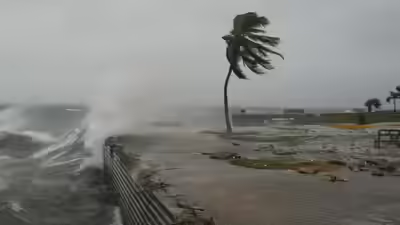
In the hours following its landfall near New Hope in the southwestern part of the island, Jamaican Prime Minister Andrew Holness officially declared the country a “disaster area.” The immediate aftermath reveals a landscape of widespread destruction, crippled infrastructure, and communities isolated by massive flooding and landslides. Melissa has not only tested the physical resilience of the island’s infrastructure but also the spirit and preparedness of its 2.8 million people.
The Onslaught: A Record-Breaking Meteorological Event
The story of Hurricane Melissa is one of extreme rapid intensification. Within a 24-hour window, the storm’s sustained winds more than doubled, transforming it from a powerful tropical storm into a monstrous Category 4 hurricane, and ultimately, a Category 5 behemoth.19 Fueled by abnormally warm ocean waters—reported to be 20$2^{\circ}\text{C}$ hotter than average—Melissa defied typical meteorological expectations, maintaining its power even as it scraped past the mountainous terrain of the Caribbean islands.21

At its peak intensity at landfall, Melissa packed sustained winds of up to 185 miles per hour (298 km/h), exceeding the 157 mph minimum for a Category 5 storm.22 This intensity tied historical records for the strongest Atlantic hurricane at landfall, underscoring the extraordinary nature of this event.23 Meteorologists and officials alike described the storm in grim terms—a “roaring lion,” an “unstoppable force,” and a storm capable of causing “total structural failure” along its path.24
The slow movement of the storm was a critical factor in the resulting devastation.25 Instead of a swift passage, Melissa lingered, subjecting areas like Jamaica to prolonged periods of hurricane-force winds and, critically, continuous, torrential rainfall.26 Forecasters had warned of rainfall totals up to 30 inches (76 cm), with isolated areas possibly receiving as much as 40 inches (1 meter).27 This unprecedented deluge fell upon already saturated ground, dramatically increasing the risk of catastrophic flash flooding and numerous landslides, particularly in Jamaica’s central and western parishes.28
The Human Toll and Scale of Disruption
The impact of Hurricane Melissa extends far beyond meteorological records; it is a profound human tragedy. The storm’s path of destruction has resulted in confirmed casualties and displaced populations across multiple Caribbean nations.

Fatalities and Injuries
As of the latest reports, a total of at least seven people have lost their lives across the Caribbean region due to the storm:
- Jamaica: Three deaths have been confirmed. Tragically, these occurred before the hurricane’s full landfall, during preparatory actions. Two individuals died from falling trees while cutting them down, and one person was electrocuted.
- Haiti: Three people have died, with the casualties linked to landslides and a collapsed wall in the storm’s initial passing. Haiti, one of the world’s poorest nations, was already under immense humanitarian strain, making the impact of Melissa particularly dire.
- Dominican Republic: One fatality was reported, with one person also currently missing.
Affected Populations and Displacement
The scale of human exposure to this catastrophic event is immense, with millions directly impacted or placed at grave risk:
Country/Region | Population Affected/At Risk | Key Impact Details |
Jamaica | Up to 1.5 million directly affected (est. by Red Cross). Total population of 2.8 million under threat. | Over 15,000 people sought refuge in activated shelters. Widespread damage to homes, hospitals, and major infrastructure. |
Cuba | Over 735,000 people evacuated. | Massive relocations ordered, particularly in eastern provinces like Santiago de Cuba and Guantánamo, in anticipation of the major hurricane’s arrival. |
Haiti | At least 1.6 million children were identified as being at risk. | Severe flooding, landslides, and damage to makeshift shelters, compounding an existing humanitarian crisis. |
Dominican Republic | More than 500,000 people lost access to water services. | Extensive damage to infrastructure, power grids, and water systems. |
The Situation for International Nationals
Due to the nature of emergency reporting, which prioritizes the overall population and local citizens, specific, verifiable numbers of citizens from countries like the USA, Canada, Australia, and Britain who have been directly affected (i.e., injured, displaced, or requiring consular assistance) are not officially compiled or released in the immediate aftermath.
However, the international response confirms a significant presence and concern for foreign nationals:
- United Kingdom: The Foreign, Commonwealth & Development Office (FCDO) activated its crisis center to assist British tourists and nationals in Jamaica. The Royal Navy’s HMS Trent was placed on standby to provide assistance. The FCDO strongly urged all UK citizens to heed local advice, stay indoors, and be prepared for extended stays due to airport closures.
- United States of America: Nonessential US military personnel and their families were evacuated from Naval Station Guantánamo Bay, which was in the storm’s projected path. For US tourists and expatriates across the affected islands, the official advice was to monitor the US National Hurricane Center and local government advisories, and be prepared for severe disruption.
- Canada, Australia, and Other Nations: While precise figures are unavailable, these nations, like many with citizens traveling or residing in the Caribbean, would be engaging their consular services to account for and assist any citizens in distress, particularly in areas like Montego Bay and Ocho Rios, which are popular international tourist destinations. The global message to all foreign visitors was clear: secure your accommodation, remain indoors, and strictly follow all mandatory evacuation orders issued by local Jamaican authorities.


Widespread Destruction and Infrastructure Collapse
Melissa’s impact on Jamaica’s infrastructure has been devastating, transforming key regions and paralyzing essential services. The government’s preparation, while robust, was overwhelmed by the storm’s Category 5 intensity.
- Damage to Property and Services: Videos and reports emerging from the island painted a grim picture: roads transformed into raging rivers, downed power lines, and the widespread sight of roofs ripped off homes and commercial buildings. The most extensive damage was reported in the south-western parishes, particularly St. Elizabeth, which is considered the “breadbasket of the country.” Local Government Minister Desmond McKenzie reported that entire sections of St. Elizabeth were “under water.”
- Power and Communication Outages: The storm knocked out power for an estimated 540,000 customers, representing roughly 77% of the entire island at one point. Widespread communication outages have complicated damage assessment and slowed initial rescue efforts, leaving communities isolated.
- Impact on Healthcare: Coastal hospitals, including the Black River Hospital in St. Elizabeth, suffered significant damage, with officials confirming structural damage and the loss of power. Health Minister Christopher Tufton confirmed that patients had been relocated from ground floors as a precautionary measure.
The immediate challenge for Jamaica will be transitioning from an emergency response phase to a long-term reconstruction and recovery effort, which experts fear will take decades to mend.
Essential Safety Precautions for Hurricane Melissa
The unified message from the Jamaican Constabulary Force (JCF), the Office of Disaster Preparedness and Emergency Management (ODPEM), and Prime Minister Holness was absolute: heed official warnings and prioritize life over property.
For residents, tourists, and international nationals in the path of a powerful hurricane like Melissa, preparedness is a multi-stage process that must be strictly adhered to:
- Before the Storm (Preparedness Phase)
- Secure Your Home: Physically secure all windows and doors. Board up glass with plywood or shutter systems. Secure loose objects outdoors, such as garbage bins, patio furniture, and tools, as they can become dangerous projectiles.
- Evacuate if Ordered: Mandatory evacuation orders must be followed immediately. Officials in Jamaica urged those in low-lying, coastal, and flood-prone areas, like Port Royal, to seek refuge. Know the location of the nearest official emergency shelter and have a route planned.
- Prepare an Emergency Kit: This kit should be ready to grab at a moment’s notice and should include:
- Water: At least one gallon per person per day for several days.
- Food: A supply of non-perishable food (canned goods, dried fruit) for a minimum of three to seven days.
- Essential Items: Medicine, first aid supplies, a battery-powered radio, flashlights, extra batteries, whistles, and fully charged power banks for mobile devices.
- Documents: Important papers, including identification, insurance policies, medical records, and cash, stored in a waterproof container.
- Fuel and Utilities: Ensure vehicles are fully fueled. Gas stations may close or lose power. Turn off main utility switches (electricity, gas, and water) if officials advise or if you are evacuating.
- During the Storm (Survival Phase)
- Stay Indoors: The safest place is inside a secure, internal room, preferably a bathroom or closet, on the lowest floor if you are not in a flood-prone area, or on the highest floor if you are in a building that can withstand the wind and is prone to flooding.
- Monitor Official Sources: Continuously follow updates and emergency instructions from the Office of Disaster Preparedness and Emergency Management (ODPEM) or the Jamaica Constabulary Force (JCF) via battery-powered radio.
- Stay Away from Windows: The threat of flying debris is immense; stay away from all windows and glass doors.
- Remain Sheltered: Do not venture outside during the eye of the storm. The calm eye is temporary, and the destructive winds will return just as violently from the opposite direction.
- After the Storm (Recovery Phase)
- Wait for the All-Clear: Do not leave your secure location until official authorities announce that it is safe to do so.
- Avoid Hazards: Stay off the roads unless it is an emergency to allow first responders to work. Be extremely cautious of flooded areas—never walk, swim, or drive through floodwaters, as only a few inches of water can sweep a vehicle away and floodwaters often hide hazards like downed power lines, debris, and contamination.
- Report Damage and Injuries: Report downed power lines or structural damage to the relevant authorities immediately.
- Check on Others: Once it is safe, check on neighbours, especially the elderly and vulnerable, who may require assistance.
 The Path Forward: Resilience and Climate Change
As Hurricane Melissa tracks away from Jamaica, moving toward Cuba and the Bahamas as a still-dangerous major hurricane, the focus shifts to the immense task of recovery. The impact is a brutal reminder of the Caribbean’s extreme vulnerability to the intensifying effects of the global climate crisis. Climate scientists have noted that the rapid intensification and sheer power of Melissa were likely exacerbated by the record-warm waters of the Atlantic, making such catastrophic events more frequent and more powerful.
For Jamaica, a nation with a rich history of resilience, the immediate priorities are clearing roads, restoring power and communication, and providing humanitarian aid—food, water, and shelter—to the tens of thousands displaced. The humanitarian network, including the Jamaica Red Cross and UN agencies, has mobilized swiftly, but the path to full recovery will be long and challenging.
Hurricane Melissa will be remembered as the storm that redefined the threat ceiling for the island nation, necessitating a significant shift in infrastructure planning, disaster preparedness, and global cooperation to protect the vulnerable populations of the Caribbean.
Hurricane Melissa has inflicted an unprecedented level of destruction on Jamaica, with a catastrophic mix of wind, rain, and storm surge. The immediate tragedy is the loss of life and the immense displacement of communities. As a Category 5 storm, Melissa exposed the fragility of island infrastructure in the face of rapidly intensifying weather events. The immediate safety of all individuals—local citizens and foreign nationals alike—remains paramount, requiring strict adherence to all official guidance to navigate the treacherous aftermath.
 Essential Guide on How to Stay Safe During a Hurricane
Hurricanes like Melissa pose an extremely dangerous, life-threatening situation with catastrophic winds, torrential rainfall, and devastating storm surges. Preparing and knowing the right actions to take are essential to safeguarding your life and your property.
Pre-Hurricane Preparation and Safety Measures
- Monitor Official Sources: Stay informed by continuously monitoring NOAA, the Meteorological Service of Jamaica (or your local meteorological service), and local news for the latest updates and advisories.
- Heed Evacuation Orders: If mandatory evacuation orders are issued for your area, leave immediately. Do not wait. This is especially crucial for residents in low-lying and flood-prone areas.
- Secure Your Home: Board up windows, secure loose outdoor items, and bring in anything that could become a projectile in high winds.
- Prepare an Emergency Kit:
- Store multiple days’ worth of non-perishable food and water (at least one gallon per person per day).
- Have a first-aid kit, essential medications, and a change of clothes.
- Ensure all mobile devices are fully charged as power and communication outages can last for days or weeks. Have extra batteries for flashlights and a battery-powered radio.
- Gather important documents (identification, insurance policies, medical records) in a waterproof container.
- Plan Communication: Contact loved ones now to let them know your location and how to best reach you. Consider registering with programs like the Smart Traveler Enrollment Program (STEP) if you are a foreign national.
During the Storm: Shelter in Place
- Shelter Indoors: Remain sheltered in place throughout the storm. Stay inside and move to an interior room, closet, or hallway on the lowest floor that is above the storm surge and flood risk, away from windows.
- Do Not Venture Out: Do not venture out of your safe shelter for any reason while the storm is active.
The Danger of the Eye of the Storm: Is the Eye of a Hurricane Safe?

A common and dangerous misconception is that the center, or “eye,” of the hurricane is a safe time to go outside.
- The Eye is a False Calm: When the eye passes overhead, the weather will temporarily become calm, the rain may stop, and the sun might even appear. This is the eye, a region of low wind speeds at the center of the storm.
- The Threat Returns: The eye is not safe. This period of calm is brief and will be followed rapidly by the other side of the hurricane’s eyewall, where the most destructive and life-threatening winds will return just as fiercely, but from the opposite direction.
- Stay Sheltered: The National Hurricane Center and local authorities explicitly warn residents not to leave their shelter as the eye of the storm passes over. Remain in your secure location until the storm has completely passed and official sources declare it safe to emerge. A good rule of thumb is to stay inside until the sun comes out twice (meaning you have passed through the entire hurricane).
 Emergency Contact Numbers for Hurricane Safety
 Jamaica Emergency Numbers
The government and emergency services have provided specific contact numbers for immediate assistance and hurricane updates.
Service | Number | Notes |
Police (General Emergency) | 119 | For all police and air-sea rescue emergencies. |
Fire and Ambulance | 110 | For medical emergencies and fire service. |
Hurricane Update | 116 | For the latest official information and weather advisories. |
ODPEM (Office of Disaster Preparedness & Emergency Management – National EOC) | 888-225-5637 (Toll-Free) or 876-906-7668 | The central disaster coordination agency. |
Jamaica Red Cross | +1-876-984-7860 | For humanitarian aid and relief coordination. |
 Cuba Emergency Guidance
In Cuba, disaster response is highly coordinated by the civil defense system, which focuses heavily on mandatory preventative evacuations. While specific emergency hotlines for the general public are less often published internationally, the immediate action should be to comply with all local Civil Defense instructions.
- Evacuation is Key: Cuban authorities have ordered mandatory evacuations for vulnerable areas. If you are in Cuba, your primary action is to follow the guidance of local authorities and Civil Defense (Defensa Civil) and move to a designated shelter.
- Police: 106
- Fire: 105
- Ambulance: 104 (Note: These general numbers may be difficult to connect during a major disaster, making adherence to Civil Defense plans critical).
For Foreign Citizens: If you are a citizen of another country (e.g., U.S., Canada, UK) traveling or residing in the affected region, you should also contact your country’s embassy or consulate for assistance and to register your location.
- U.S. Citizens: State Department – Consular Affairs at 1-888-407-4747 or +1-202-501-4444.
 Post-Hurricane Safety Tips
- Immediate Safety & Assessment
- Stay Informed: Continue to monitor local radio, TV, or emergency alerts. Do NOT return to an evacuated area until officials have declared it safe.
- Watch for the “Eye”: If you were in the path of the storm, remember the calm center (eye) is temporary. Hurricane-force winds will return quickly from the opposite direction. Stay sheltered until the all-clear is given.
- Check for Injuries: Check yourself and your family for injuries. Do not attempt to move seriously injured people unless they are in immediate danger. Call for help if possible.
- Beware of Carbon Monoxide: Never use portable generators, grills, or camping stoves indoors or in a garage. These produce lethal, odorless carbon monoxide gas. Place them at least 20 feet from any window, door, or vent.
- External Hazards (Outside Your Home)
- Avoid Floodwater: Do not walk, swim, or drive through standing or moving floodwater. Just six inches of moving water can knock a person down, and it may be contaminated with sewage, chemicals, sharp debris, or live electrical currents.
- Downed Power Lines: Treat all downed or sagging power lines as LIVE. Stay far away and immediately report them to the electric company, police, or fire department.
- Structural Damage: Before entering your home, walk carefully around the exterior to check for signs of damage:
- Leaning walls or chimneys
- Cracked foundations
- Loose power lines or gas lines
- Loose or dangling tree branches.
III. Internal Hazards (Inside Your Home)
- Gas Leaks: If you smell gas, hear a blowing or hissing sound, or suspect a leak:
- Leave immediately (go outdoors).
- If possible, turn off the gas at the main outside valve.
- Call the gas company or fire department from a neighbor’s home.
- Crucially: A licensed professional must turn the gas back on for safety.
- Electricity:
- If you see sparks, broken/frayed wires, or smell burning insulation, turn off the electricity at the main breaker or fuse box if it is safe to reach.
- NEVER turn the power on or off while standing in water.
- Have a qualified electrician check the system if it was exposed to water before turning it back on.
- Lighting: Use battery-powered flashlights or lanterns, not candles, as they pose a serious fire risk, especially if there is a gas leak.
- Water Safety:
- Assume your water supply is contaminated until local officials say otherwise.
- Only use bottled, boiled, or chemically-treated water for drinking, cooking, and hygiene.
- Food Safety: Throw away all food (including canned items) that has come into contact with floodwater or any refrigerated food that was exposed to temperatures above $40^\circ\text{F}$ for more than two hours.
- Cleanup and Documentation
- Wear Protective Gear: Put on long sleeves, long pants, sturdy waterproof boots, and heavy-duty work gloves when clearing debris or cleaning up. The most common post-disaster injury is cut feet.
- Documentation for Insurance: Take extensive photos or videos of the damage to your home and property before you start cleaning up.
- Mold Prevention: If your home was flooded, open windows and doors to ventilate and dry out the building as quickly as possible (within 24-48 hours) to prevent toxic mold growth.
Ultimately, navigating the aftermath of Hurricane Melissa requires patience, vigilance, and community spirit. The path to recovery is often long and frustrating, but remember that you are not alone. By prioritizing safety, following official guidance, and checking on your neighbors, we can collectively face the challenges ahead. Disasters test our resilience, but they also showcase the remarkable strength and solidarity of the human spirit. Stay safe, stay connected, and take the recovery one cautious step at a time.
Madhav Bhope, India
Discover more from Blissful Life
Subscribe to get the latest posts sent to your email.