






















https://goodworld.in A website by Madhav Bhope

New year Greeting Quotes in Marathi and Hindi

Readymade New year quotes- Marthi and hindi

तुम्हाला आवडलेला संदेश असेल त्याचे Copy Quote हे बटन दाबा. तुम्हाला हिरव्या अक्षरात copied! असा संदेश येईल. नंतर Create your own fancy text मध्ये जाऊन- रिकाम्या जागेत दाबा- तुमचा मेसेज तिथे कॉपी होईल. 

त्यानंतर Choose style मधील 6 पैकी कोणतीही एक स्टाइल सिलेक्ट करा (ही फॉन्ट ची स्टाइल आहे). नंतर Choose image size मध्ये क्लिक केल्यानंतर तुम्ही तुमचा मेसेज, आडवा, चौकोनी की उभा पाहिजे ते सिलेक्ट करा. नंतर तुमच्या टेक्स्ट चा रंग तुम्हाला हवा तो सिलेक्ट करा. नंतर तुम्हाला टेक्स्ट चे बॅकग्राऊंड कोणत्या रंगाचे हवे ते सिलेक्ट करा. 

आपला मेसेज कसा दिसतो ते preview मध्ये पहा, आणि download as image हे बटन क्लिक करा. 

तुमचा संदेश तुमच्या मोबाईल वर डाऊनलोड झालेला असेल! आता तो संदेश तुम्ही कोणालाही पाठवू शकता!

नवीन वर्षासाठी आपल्या मित्र आणि नातेवाईकांना सुंदर संदेश पाठविता यावे यासाठी Goodworld.in (माधव भोपे) यांच्याकडून ही खास भेट आपणांस!

मराठीतून नवीन वर्ष शुभेच्छा! Click to Copy

वर्ष नवे, हर्ष नवा जीवन उत्कर्ष नवा- नवी उमंग, नवा तरंग आनंदी अंतरंग! येणारे नवीन वर्ष तुम्हाला आरोग्य, आनंद आणि भरभराटीचे जावो!

नवी तरु आभा, नवा समीर- उधळीत आले नूतन वर्ष- सुप्त संकल्प जागे झाले- पावुनिया नव उत्कर्ष ! नवीन वर्षाच्या मनःपूर्वक शुभकामना!

वर्ष बदलो, दिवस बदलो, --- पण मैत्री तीच राहो, नवीन वर्षाच्या मनःपूर्वक शुभकामना!

प्रत्येक यशात, -- प्रत्येक वळणावर तुझी साथ लाभो.. ---- नवीन वर्षाच्या हार्दिक शुभेच्छा..! ----

नव्या वर्षी नवीन स्वप्नं, जुनीच मैत्रीची ओढ--- नवीन वर्षाच्या हार्दिक शुभेच्छा..!

आयुष्याच्या गर्दीतही, मैत्रीची वाट सापडो, नववर्षात प्रत्येक क्षण आपल्यासाठी खास ठरो.!!! नवीन वर्षाच्या हार्दिक शुभेच्छा..!

स्वप्नांना पंख देताना, हातात हात असो, नववर्षात मैत्रीचा प्रवास अजून गोड होवो.. नवीन वर्षाच्या हार्दिक शुभेच्छा..!

गेलं ते वर्ष, गेला तो काल, नवीन आशा-अपेक्षा घेऊन आले 2026 साल.!! नवीन वर्षाच्या हार्दिक शुभेच्छा!

पुन्हा एक नवीन वर्ष, पुन्हा एक नवी आशा, तुमच्या कर्तॄत्वाला पुन्हा एक नवी दिशा, नवी स्वप्ने, नवी क्षितिजे, सोबत माझ्या नव्या शुभेच्छा! नवीन वर्षाच्या हार्दिक शुभेच्छा!!!

येवो समृद्धी अंगणी, वाढो आनंद जीवनी--- तुम्हासाठी या शुभेच्छा, नववर्षाच्या या शुभदिनी..! नववर्षाच्या खूप खूप शुभेच्छा!

Create Your Own Fancy Text

Your text will appear here

हिन्दी में नव वर्ष की शुभ कामनायें - Click to Copy

नूतन का अभिनंदन हो प्रेम-पुलकमय जन-जन हो! नव-स्फूर्ति भर दे नव-चेतन- टूट पड़ें जड़ता के बंधन---- नये वर्ष की शुभ कामनाएँ!

शुद्ध, स्वतंत्र वायुमंडल में निर्मल तन, निर्भय मन हो! प्रेम-पुलकमय जन-जन हो, नूतन का अभिनंदन हो! नये वर्ष की शुभ कामनाएँ!

प्रति अंतर हो पुलकित-हुलसित-- प्रेम-दिए जल उठें सुवासित-- नये वर्ष की शुभ कामनाएँ!

जीवन का क्षण-क्षण हो ज्योतित, शिवता का आराधन हो! प्रेम-पुलकमय प्रति जन हो, नूतन का अभिनंदन हो! नये वर्ष की शुभ कामनाएँ!

नया वर्ष संगीत की बहती नदी हो-- गेहूँ की बाली दूध से भरी हो-- अमरूद की टहनी फूलों से लदी हो-- खेलते हुए बच्चों की किलकारी हो नया वर्ष-- नये वर्ष की शुभ कामनाएँ!

रात न बदली, दिन ना बदले,-- बदल गये मन भाव रे!-- झूमें, गाएँ, खुशी मनाएँ,-- ये सब मन के ठाँव रे -- नये वर्ष की शुभ कामनाएँ!

किलकारी भर कर हँस लें हम,-- खुशहाली के गीत हों!-- मतभेदों का दौर चले ना,-- ह्रदय बसी बस प्रीत हो!-- नये वर्ष की शुभ कामनाएँ!

करें नव वर्ष का स्वागत, -- तहेदिल से सभी मिलके। -- ये सृष्टि हंस रही है आज,-- अभिनंदन में खिलखिल के-- नये वर्ष की शुभ कामनाएँ!

जन-जन में सद्भाव जगे, -- और घर-घर में फैले उजियारा।। स्वागत है नववर्ष तुम्हारा-------- नये वर्ष की शुभ कामनाएँ!

भूल सके जग सब पी़ड़ाएं -- दुख दर्दों क्लेशों का मारा।।-- स्वागत है नववर्ष तुम्हारा--- नये वर्ष की शुभ कामनाएँ!

वातावरण नया बन जाए, -- हर दिन नई सौगातें लाए--- सब उदास चेहरे मुस्काएं, -- नए विचार नए फूल खिलाएं-- ममता की शीतल छाया में -- जिए सुखद जीवन जग सारा।।---- स्वागत है नववर्ष तुम्हारा---- नये वर्ष की शुभ कामनाएँ!

Create Your Own Fancy Text

Your text will appear here

More Christmas Quotes

featured-mage-for-more-quotes

Christmas Quotes - Click to Copy

Merry Christmas and Happy New Year!

Wishing you joy, peace, and love this Christmas season.

May your days be merry and bright!

Christmas is not a time nor a season, but a state of mind.

The best way to spread Christmas cheer is singing loud for all to hear.

Christmas is not found in the calendar, but in the kindness we carry all year long.

Christmas is not a date we reach, but a feeling we awaken within

In the quiet giving of love, the soul discovers Christmas.

At Christmas, even the simplest moment shimmers with grace

Hope lights its candle at Christmas, and faith hums a sacred song.

Beyond the gifts we place beneath the tree, Christmas places gratitude within the heart.

Love is the holiest ornament that Christmas asks us to wear.

The spirit of Christmas is weighed not in gold, but in grace.

Christmas is born where compassion dares to act

When the world rushes ahead, Christmas whispers, “Be still.”

At Christmas, silence speaks in mercy and hearts learn to listen.

Christmas blooms in small joys and quiet togetherness.

A single act of kindness shines brighter than a thousand lights at Christmas.

When love dwells within, every day carries the breath of Christmas.

Christmas asks not for perfection, only for presence. Merry Christmas!

The warmth of Christmas lingers longer than winter’s cold.

Christmas is love made flesh through thought, word, and deed.

Joy at Christmas is a flame that grows as it is shared

Christmas teaches us that miracles arrive softly, on tiptoe.

Create Your Own Fancy Text

Your text will appear here

🎁 What You Can Do Here

1. Copy Ready-Made Christmas Quotes

Browse our collection of beautiful Christmas quotes and copy them with just one click.

2. Create Custom Fancy Text

Design your own styled text with different fonts, colors, and backgrounds, then download it as an image.

📝 How to Use the Quotes Section

Step 1: Browse Quotes

Scroll through our collection of heartfelt Christmas messages below.

Step 2: Copy Your Favorite

  • Find a quote you love
  • Click the “Copy Quote” button
  • The button will turn green and say “Copied!”

Step 3: Use It

  • Paste it in WhatsApp, email, or text messages
  • Add it to your own greeting cards
  • Share on social media

That’s it! Super simple.

🎨 How to Create Fancy Text

Want to add your own personalized message to a card? Follow these steps:

Step 1: Type Your Message

In the text box, type your message. Examples:

  • “Merry Christmas Mom!”
  • “Happy Holidays 2025”
  • “Wishing you joy and peace”

Step 2: Choose a Font Style

Click on your preferred style:

  • Classic – Traditional elegant look
  • Elegant – Sophisticated italic style
  • Bold – Strong uppercase letters
  • Festive – Fun decorative style
  • Modern – Clean contemporary look
  • Script – Beautiful handwriting style

Step 3: Pick Your Text Color

Click on any color circle to choose your text color:

  • Christmas Red • Christmas Green • Gold • White • Black • Blue • Purple • Pink

Step 4: Choose Background Color

Select a background color for your text:

Light Backgrounds (for dark text):

  • White • Light Yellow • Light Orange • Light Green • Light Blue • Light Pink

Dark Backgrounds (for light text):

  • Orange • Christmas Red • Christmas Green • Dark Blue

💡 Tip: Use light text on dark backgrounds and dark text on light backgrounds for best readability!

Step 5: Preview Your Design

Watch the preview box update in real-time as you make selections. What you see is exactly what you’ll get!

Step 6: Download

Click “Download as Image” to save your styled text as a PNG image file.

💡 Pro Tips & Ideas

Color Combinations That Work Great:

Classic Christmas:

  • Red text + White background
  • White text + Christmas Red background
  • Gold text + Christmas Green background

Elegant & Sophisticated:

  • Black text + Light Yellow background
  • Gold text + Dark Blue background
  • White text + Christmas Green background

Fun & Festive:

  • Red text + Light Pink background
  • Green text + Light Orange background
  • White text + Orange background

Font Style Recommendations:

For Parents/Grandparents:

  • Use Classic or Elegant styles
  • Traditional colors (Red, Green, Gold)

For Friends:

  • Try Bold or Festive styles
  • Bright, fun colors (Pink, Orange, Blue)

For Business/Professional:

  • Use Modern or Classic styles
  • Sophisticated colors (Black, Dark Blue, Gold)

For Kids:

  • Use Festive or Bold styles
  • Bright, cheerful colors (all the bright ones!)

Message Ideas:

Short & Sweet:

  • “Merry Christmas!”
  • “Happy Holidays 2025”
  • “Season’s Greetings”
  • “Joy & Peace”

Personal Touch:

  • “Merry Christmas [Name]!”
  • “Love from the [Family Name] Family”
  • “Thinking of you this Christmas”

Warm Wishes:

  • “Wishing you a wonderful Christmas”
  • “May your holidays sparkle with joy”
  • “Sending warm holiday wishes”

Shivajinagar Wakdewadi Pune Bus timings MSRTC

MSRTC pune time table
Shivajinagar Bus Timings

Shivajinagar Wakdewadi Pune Bus Timings

Find Your Bus Timings

Full Bus Timetable

Sr.No. Destination Timings

For further enquiries:

Toll-free contact number: 1800221250

Location of Wakdewadi Bus Stand, Pune

20250824 174021

IFSC code search for Banks in India

IFSC featured image

IFSC Code Finder for Banks in India

goodworld.in
OR
0 results found
Enter search criteria and click Search


What is an IFSC code?

The full form of IFSC code is Indian Financial System Code. It is an 11 character alpha-numeric code  and is unique to each bank branch in India.

The IFSC code was introduced by the Reserve Bank of India (RBI) in 2008.  It was designed to modernize and streamline banking operations, particularly for electronic funds transfers.

The Indian Financial System Code (IFSC) has undergone a significant evolution since its inception. Over time, as the banking sector expanded and technological advancements took place, the IFSC system became an integral part of the National Electronic Funds Transfer (NEFT) and Real-Time Gross Settlement (RTGS) mechanisms. With the advent of Unified Payments Interface (UPI) and other digital payment platforms, IFSC codes have played a crucial role in ensuring secure and seamless transactions. Today, IFSC codes continue to be a fundamental component of India’s digital financial infrastructure, promoting efficient and standardized banking transactions. It is assigned by the Reserve bank of India to Banks in India.

IFSC Code Full Form and Its Components Explained

As mentioned above, the full form of IFSC means Indian Financial System Code. We will understand what each part of the code stands for:
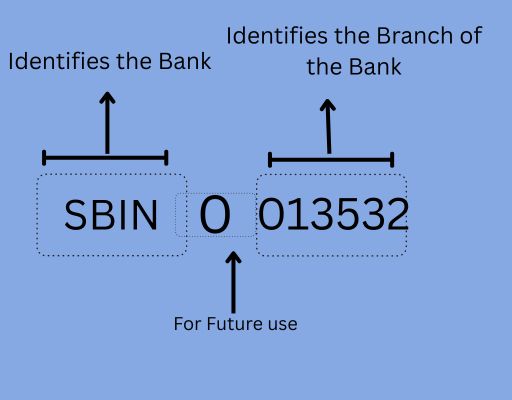
IFSC example

First Four Characters (Alphabets) :

The initial four characters of the IFSC code represent the bank’s name. These characters are alphabetic and help identify the respective bank associated with the transaction.

Fifth Character (Zero) :

The fifth character of the IFSC code is always a zero. It has been reserved for future use and is currently static across all IFSC codes.

Last Six Characters (Alphanumeric) :

The final six characters of the IFSC code uniquely identify the specific branch of the bank. This alphanumeric combination is crucial for directing the funds accurately to the intended recipient.

These codes are allocated by the Reserve Bank of India (RBI) for identification purposes. This means that no two banks or their branches can have the same code.

Importance of IFSC Codes in Banking Transactions

Accurate Transfers :

The IFSC code plays a vital role in ensuring that funds are routed accurately to the intended recipient’s bank branch. With the unique alphanumeric combination, it eliminates the possibility of confusion and ensures that the funds reach the correct destination.

Electronic Transactions :

The IFSC code is particularly essential for transactions involving National Electronic Funds Transfer (NEFT), Real-Time Gross Settlement (RTGS), and Immediate Payment Service (IMPS). These electronic fund transfer mechanisms rely on the IFSC code to facilitate secure and efficient transactions.

Online Banking :

In the age of digital banking , where online transactions have become the norm, the IFSC code is a key component. Individuals conducting online transactions need to enter the IFSC code to initiate fund transfers, making it a crucial element in the digital banking ecosystem. It facilitates a plethora of online transactions such as paying bills, EMIs, insurance premiums, and taxes.

UPI Transactions :

Even in the case of Unified Payments Interface (UPI), which has gained immense popularity for its simplicity and speed, the IFSC code plays a role when transferring funds between different banks. While UPI transactions often use mobile numbers or virtual payment addresses, the IFSC code becomes relevant in cross-bank transfers.

International Transactions :

While the primary function of the IFSC code is for the domestic transactions, its concept aligns with the international standards of bank branch identification. For international transactions, SWIFT codes are used, serving a similar purpose to IFSC codes on a global scale.

Where to look for  Your Bank’s IFSC Code?

You can see your bank’s branch IFSC code at the following places:
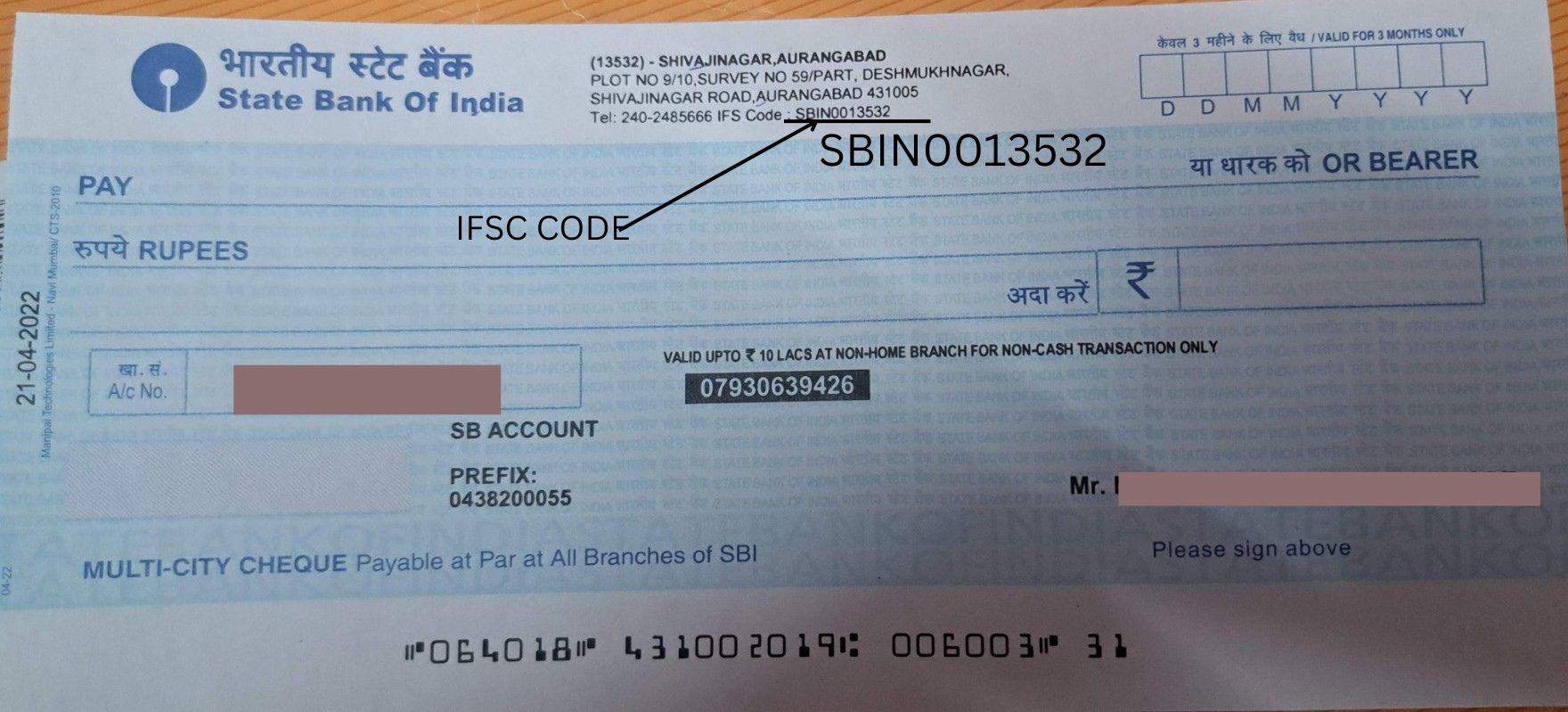
On your  Cheque Book :

IFSC cheque-2

The IFSC code is usually printed on your bank’s cheque leaves. It is typically found at the top of each cheque leaf, either on the left or the right side.

Bank Account Passbook :

Check the front sheet of your bank passbook for account and branch details, including the IFSC. It is usually printed on the top right corner of the front sheet.
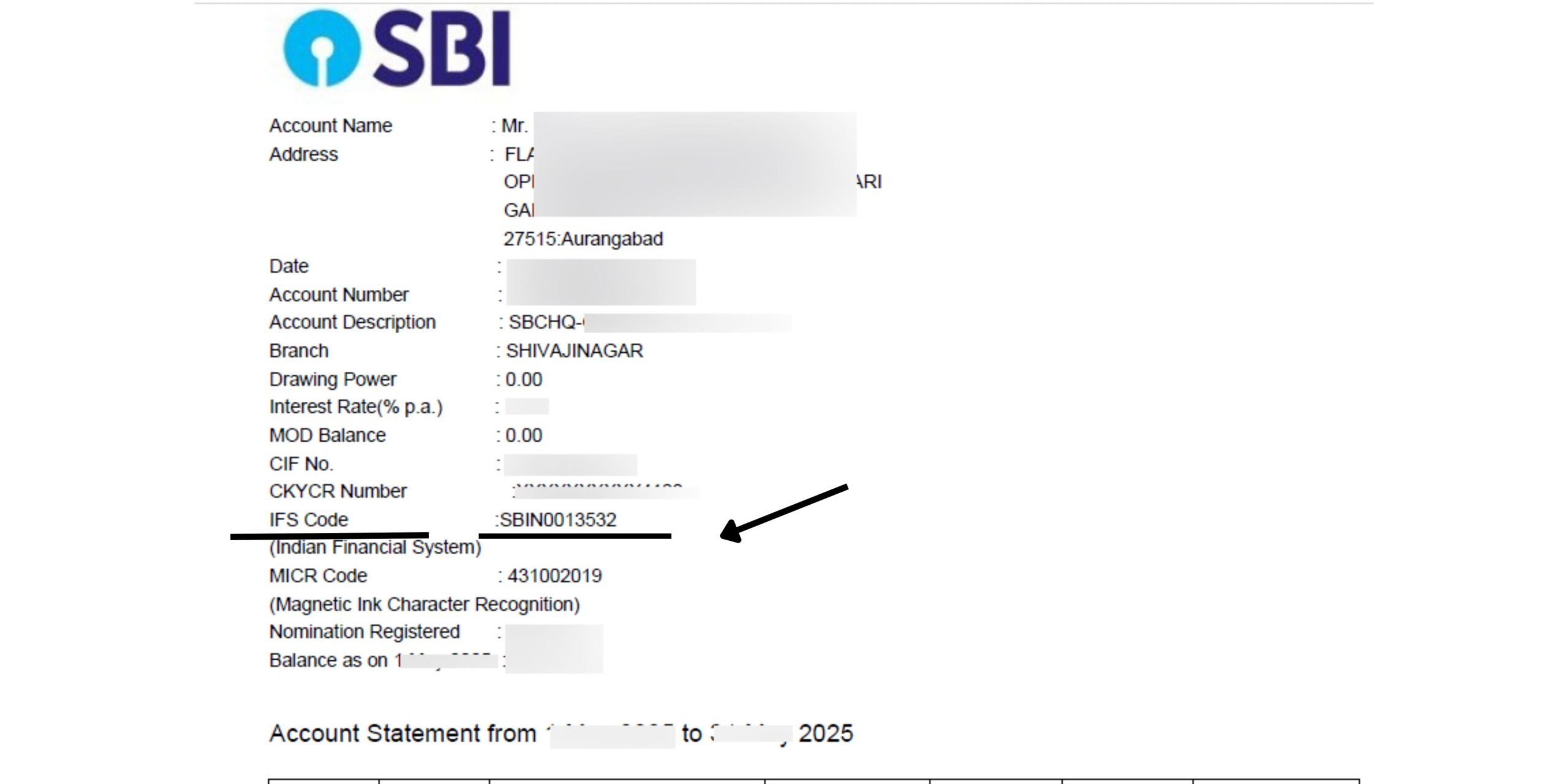
Your Account Statement

account statement

When you view or take a print out of your account statement online, you can see the IFSC code of your branch on the statement.

The need to search/ find the IFSC code of a bank branch:

When you want to transfer funds to someone either in the same Bank or another bank, you will need to first mention the IFSC code of the branch, and then the particular account number to which you want to transfer the funds. So when you know the name of the bank and branch, with the help of this tool, you can find the IFSC code and the full address of the branch immediately.

On the other hand, if you just know the IFSC code, you can find the full details of the bank, its branch and its address also with the help of this tool.

Although there are many tools available across the internet, including RBI own website, this tool has been developed by us with great efforts, taking into account the need of the common user as well as the Bankers and other financial agencies and is very convenient to use.

This tool uses list of 174898 IFSC codes provided by RBI  on its website updated as on 30.04.2025.

Precautions and disclaimer:

While going through the data available, we have found that in some cases, there are spelling mistakes- for example, the name of ‘AURANGABAD’ is mentioned as ‘AURANGABD’ in few places and AURANGABARD in one case. So you won’t get the results if you select ‘AURANGABAD’ in the drop down menu. The name of ‘BEED’ in Maharashtra is mentioned as “BID’ in some  places. The addresses of the branches have been jumbled up in case of merger of Banks.

However, we are sure, with the help of this tool, you will be able to find the information you are looking for very easily.

In case you find any anomalies, please inform us at goodworldmd@gmail.com so  that we can make necessary corrections.

Disclaimer

While we have made our best efforts to provide the user with  the latest data updated as available from RBI, users are requested to confirm the information with the respective bank before using the information provided. We accept no responsibility for the information provided on this platform and will not be responsible for any loss or damage suffered by any user, directly or indirectly by making use of the data provided on this website.

We expect you to use this website only for reference, and please confirm from the bank directly before performing any transaction.
Fixed deposit interest calculator

fixed deposit interest calculator

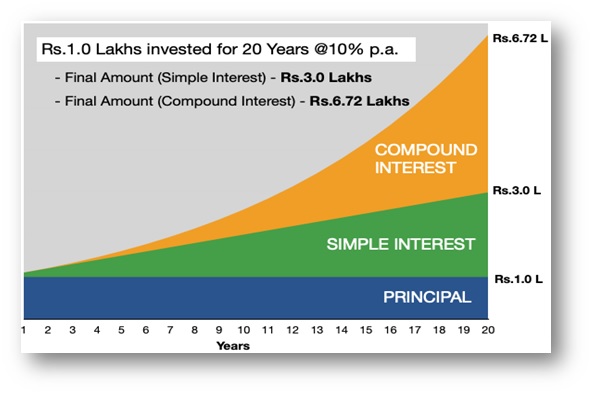
The power of compounding

Understanding Fixed Deposits in India: Maximizing Returns with Reinvestment

Keeping your amount in a bank in a simple fixed deposit and keeping it in a Reinvestment deposit makes a great difference due to the power of compounding. Because the interest earned on the deposit is again re-invested, every three months and the interest also earns interest. This is called ‘compounding’ and it makes a big difference in the maturity value of your deposit.power of compounding

To help you easily calculate the cumulative interest on your fixed deposit, compounded quarterly, our Reinvestment Deposit Calculator below allows you to calculate expected returns based on deposit amount, tenure, and interest rates. By inputting values, you can instantly see the yield for each reinvestment option, making it easier to identify which banks offer the most advantageous returns.

Reinvestment Deposit Calculator

Fixed deposits (FDs) continue to be a preferred investment choice in India, offering stability and assured returns. As of 2024, most banks are providing competitive FD rates due to changes in market liquidity and inflation rates. These deposits are particularly popular among conservative investors who prioritize security over higher, but riskier, returns. A unique type of FD, called a reinvestment deposit or cumulative FD, offers compounded interest. Instead of receiving periodic interest payments, the interest earned is reinvested, compounding at each interval and yielding a higher return at maturity.

Currently, Indian banks’ FD interest rates range from around 3% to 7% annually, or even more, in some cases, depending on tenure, deposit size, and the bank’s specific policy. Many government and private banks offer reinvestment options, and the yield can vary considerably, making it essential for investors to compare different banks’ offerings.

To help you assess these variations, our **Reinvestment Deposit Calculator** above allows you to calculate expected returns based on deposit amount, tenure, and interest rates. By inputting values, you can instantly see the yield for each reinvestment option, making it easier to identify which banks offer the most advantageous returns.

Using this calculator, investors can make well-informed decisions, helping them maximize their FD investments while balancing security and growth.

 Mutual funds and SIPs are a great way for the common investor. You can also make use of our SIP calculator here


sip calculator

SIP calculator

sip calculator

Using the SIP Calculator: Your Financial Planning Companion.

To give investors a more practical approach, we’ve embedded a SIP calculator below. The SIP calculator allows users to estimate the future value of their SIP investments by entering variables such as the monthly investment amount, expected return rate, and investment period. This tool is extremely useful for planning your finances, as it gives you a clear understanding of the potential returns based on your inputs.

SIP and Lumpsum Calculator
SIP
Lumpsum

Why Mutual Funds are an Ideal Alternative Investment for the Common Investor

SIP: A Smart Way to Invest in Mutual Funds

Introduction

In recent years, mutual funds have gained popularity among a diverse set of investors in India. This mode of investment has proven to be an excellent alternative to traditional options such as fixed deposits, gold, and real estate. For common investors who seek to grow wealth steadily, mutual funds offer the benefits of professional management, diversification, and potentially higher returns. Additionally, the advent of Systematic Investment Plans (SIPs) has empowered investors to achieve their financial goals more efficiently, allowing them to invest consistently without needing a large upfront capital. In this article, we will explore the history of mutual funds in India, how mutual funds work, the advantages of SIP, and a practical SIP calculator that can help you estimate your investment returns.


 A Brief History of Mutual Funds in India

Mutual funds have been a part of the Indian investment landscape since 1963, when the Government of India launched the Unit Trust of India (UTI) as the country’s first mutual fund entity. For decades, UTI was the sole player, and mutual funds were relatively limited in scope. However, in 1987, the market opened to public sector banks and institutions, with several banks launching their own mutual fund schemes. In 1993, the regulatory body SEBI (Securities and Exchange Board of India) established guidelines, leading to the entry of private sector mutual funds. Today, the mutual fund industry in India is a vibrant and dynamic sector, managed by multiple private and government entities that offer products across equity, debt, hybrid, and other categories. Mutual funds are now accessible to investors at different income levels, enabling a large segment of the population to participate in wealth creation.


How Mutual Funds Work

A mutual fund pools money from multiple investors, which is then managed by a professional fund manager who allocates it across various assets like stocks, bonds, and other securities. The goal is to generate returns based on the fund’s investment objective. For example, an equity fund primarily invests in stocks and aims for capital appreciation, while a debt fund invests in fixed-income instruments, targeting stable returns with lower risk. Each investor owns “units” of the fund, which represent their share of the pooled assets. The value of these units fluctuates based on the performance of the underlying assets, allowing investors to gain or lose value in proportion to the fund’s success.


 Benefits of Investing in Mutual Funds

Mutual funds provide several benefits that make them attractive to everyday investors:


Professional Management

Experienced fund managers make informed decisions, adjusting the portfolio to market conditions, thus taking the burden off investors.

Diversification

Mutual funds spread investments across a wide array of assets, reducing the risk of exposure to a single stock or sector.

– **Liquidity**: Most mutual funds allow investors to redeem their units at any time, providing a high level of liquidity.

– **Affordability**: Investors can begin with a small initial investment, making mutual funds accessible to individuals with varying financial capacities.

– **Flexibility**: Investors can choose from various fund types based on their financial goals and risk tolerance.


 SIP: A Smart Way to Invest in Mutual Funds

Systematic Investment Plans (SIPs) have revolutionized mutual fund investment by allowing investors to contribute a fixed amount regularly rather than a lump sum. SIPs make it easier for individuals to invest consistently, regardless of market conditions, which is crucial for wealth creation over time. By investing a small amount each month, investors enjoy the benefits of “rupee cost averaging,” which involves buying more units when prices are low and fewer units when prices are high. This approach minimizes the impact of market volatility on returns.


 The Power of Compounding with SIPs

One of the biggest advantages of SIP is compounding. With each SIP contribution, the invested amount grows over time, earning returns on both the initial investment and the accumulated earnings. This compounding effect can lead to significant wealth accumulation over the long term, making SIP an ideal choice for achieving goals like retirement planning, children’s education, and wealth creation.


 Using the SIP Calculator: Your Financial Planning Companion

To give investors a more practical approach, we’ve embedded a SIP calculator above. The SIP calculator allows users to estimate the future value of their SIP investments by entering variables such as the monthly investment amount, expected return rate, and investment period. This tool is extremely useful for planning your finances, as it gives you a clear understanding of the potential returns based on your inputs.

You can also try our Fixed deposit interest calculator here: To have ready calculations of your cumulative fixed deposit of reinvestment deposit as they are called in some banks, giving you the power of compounding